

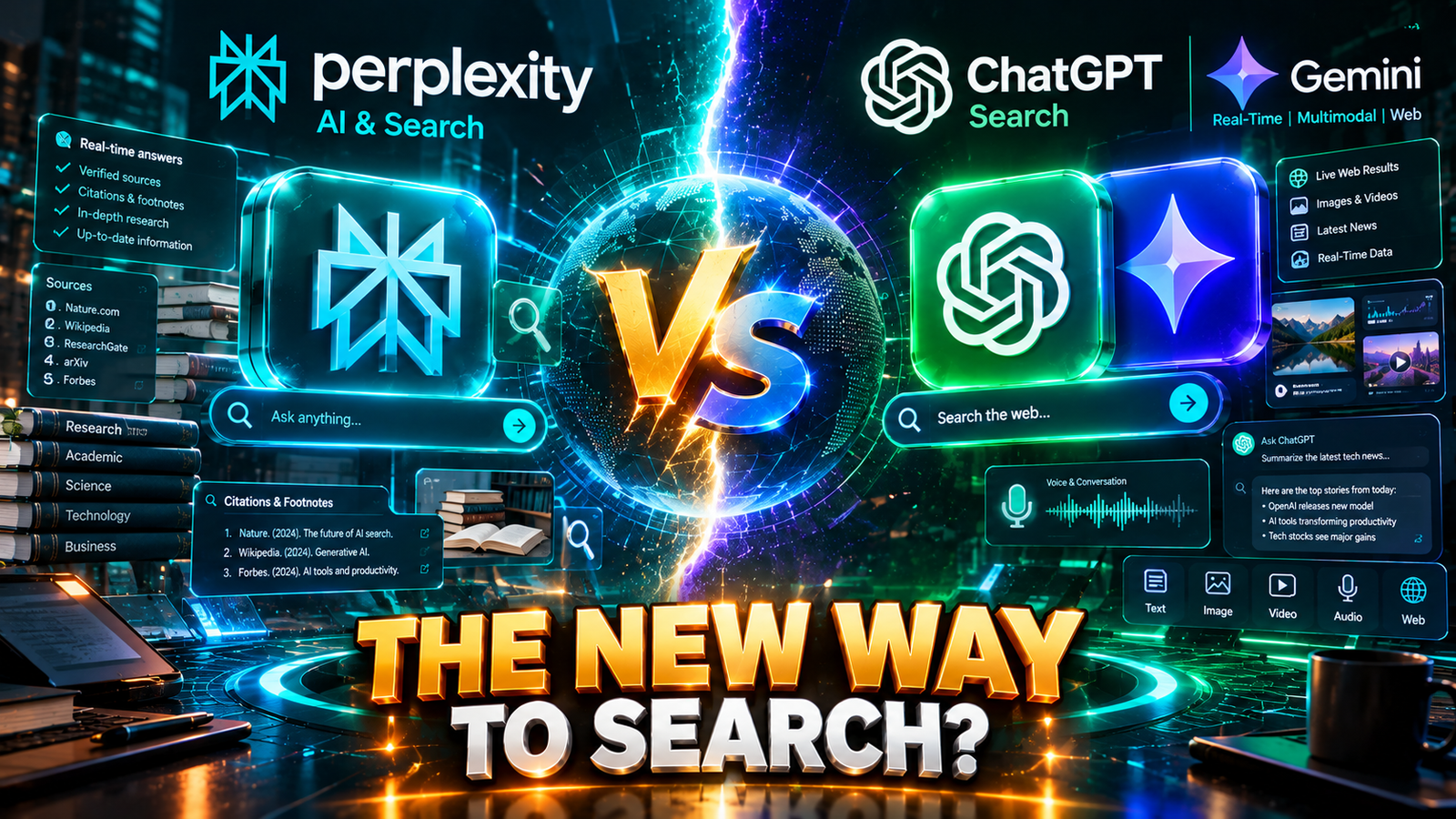
The way we search for answers on the web has changed forever. For two decades, querying the internet meant typing fragmented keywords into a box and sifting through dozens of blue links and sponsored ads. Today, the rise of the modern conversational search engine allows users to ask complex questions in plain human language and receive synthesized, direct answers complete with live source citations.
Whether you are conducting deep market research, debugging code, or comparing products, finding the right conversational search engine can save you hours of manual browsing. In this guide, we break down how conversational search works, review the top platforms leading the market, and help you choose the best tool for your daily workflow.
What Is a Conversational Search Engine?
A conversational search engine is an AI-powered discovery platform that merges real-time web retrieval with large language models. Instead of simply ranking websites based on backlink volume and metadata, it reads and synthesizes information across multiple authoritative pages in real time.
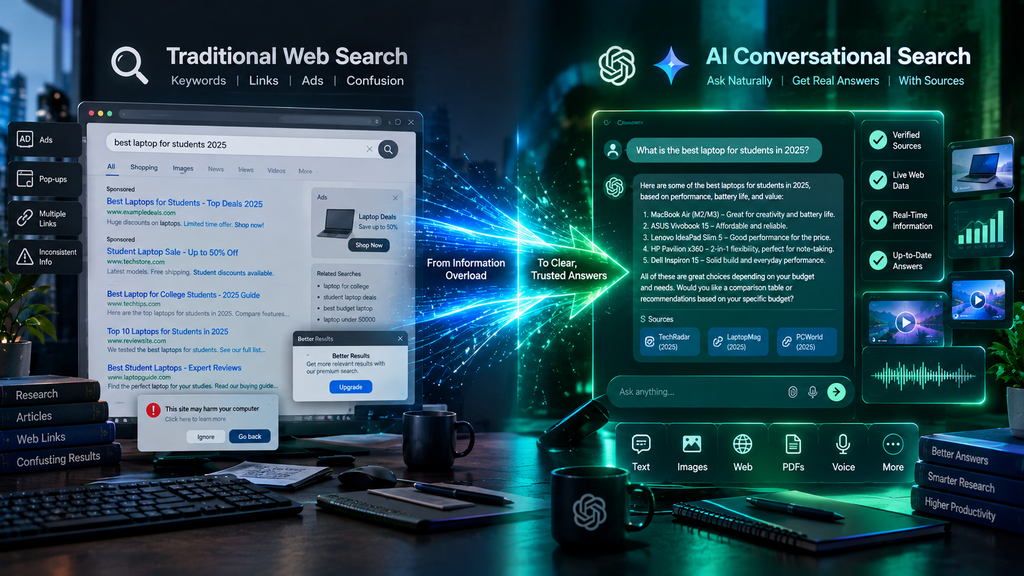
Key Differences: Traditional vs Conversational Search
| Feature | Traditional Search (Google, Bing) | Conversational Search Engine (Perplexity, ChatGPT) |
| Input Format | Keyword-focused (“best laptop under $1000”) | Natural conversational questions with nuance |
| Output Delivery | Pages of ranked external hyperlinks | Direct synthesized summary with footnotes |
| Follow-Up Ability | Requires starting a new search query | Maintains context for continuous interactive queries |
| Source Transparency | User manually evaluates each webpage | Inline source citations attached to every claim |
The Best Conversational Search Engine Platforms in 2026
1. Perplexity AI: The Academic and Research Gold Standard
Perplexity AI remains the benchmark for pure research utility. It functions as a purpose-built discovery platform designed from the ground up around source verification.
- Pro Search (Deep Research): Perplexity asks clarifying questions when a prompt is broad, then queries dozens of databases before providing a detailed report.
- Granular Collections: Organize research threads into dedicated workspaces for long-term projects.
- Transparent Citations: Every sentence links directly to trusted publications, academic journals, or verified web pages.
2. ChatGPT Search: The Frictionless Daily Assistant
OpenAI integrated native real-time web search directly into its main interface. If you already use ChatGPT for creative drafting, its conversational search capability feels completely seamless.
- Contextual Awareness: You can transition from asking about current geopolitical news directly into drafting an email based on those facts.
- Interactive Visuals: Delivers live stock charts, sports scores, and local weather forecasts within conversational answers.
3. Google Gemini: Deep Ecosystem Integration
Google Gemini leverages Google’s foundational web index to deliver real-time data directly connected with Google Maps, YouTube, and Workspace.
- Multimodal Search: Upload documents or screenshots and query the web regarding visual elements.
- Google Workspace Integration: Ground live search queries against your private Google Docs and Gmail records.
Why Every Professional Needs a Conversational Search Engine
- Massive Time Savings: You bypass affiliate popups, intrusive newsletter banners, and recipe backstory fluff.
- Context Retention: You can ask 5 consecutive follow-up questions without repeating the original premise.
- Multi-Perspective Synthesis: Instead of reading one biased article, a conversational search engine cross-references multiple independent publishers to form a cohesive summary.
Connecting Your AI Workflow (Internal Links)
A conversational search engine excels at discovery, but modern workflows often require specialized tools for production:
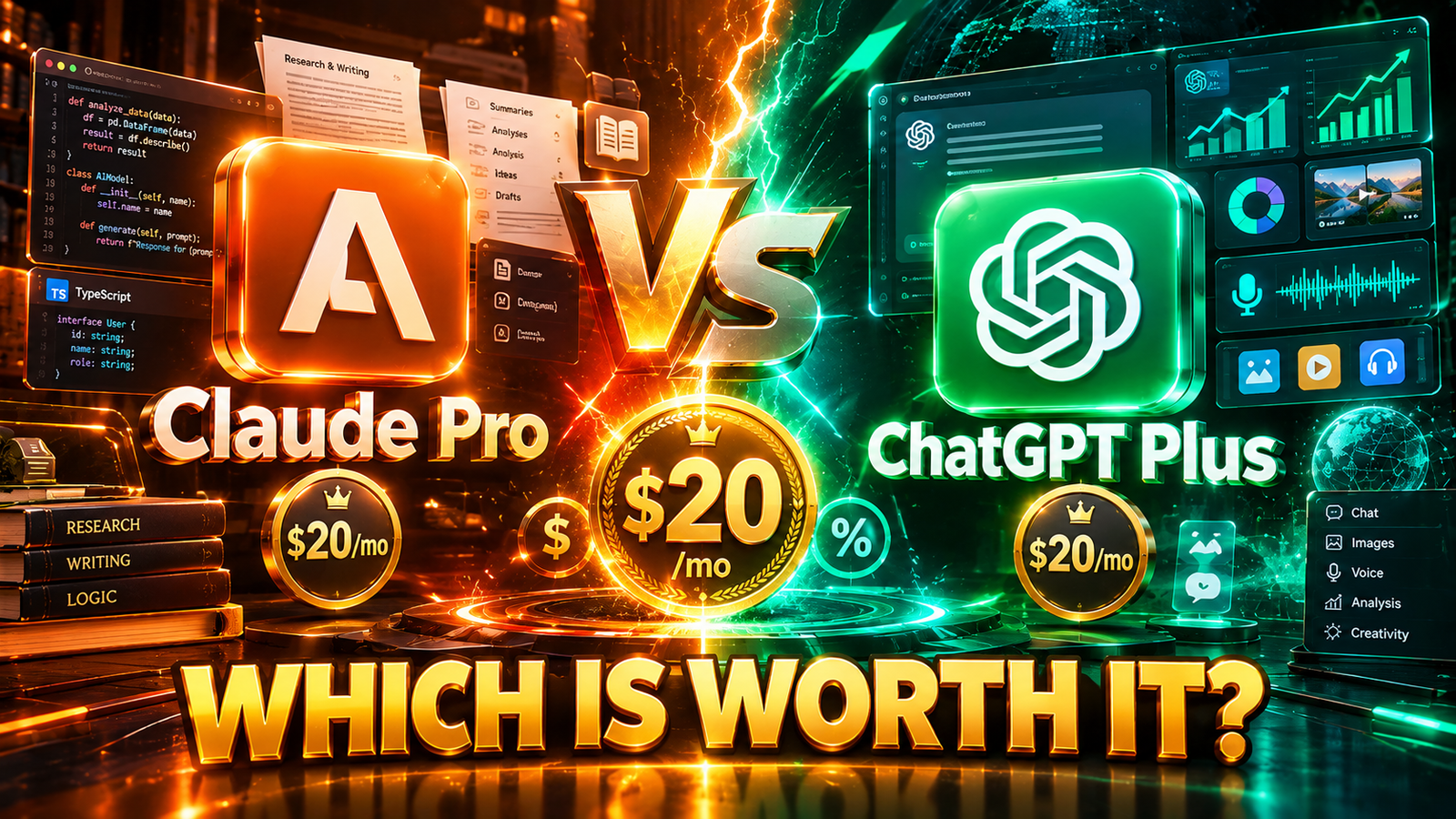
- If your priority is software development and high-level prose rather than pure research, read our deep comparison of Claude Pro vs ChatGPT Plus.
- For hands-free interaction while on the go, check out our guide on Voice & Personal AI Assistants.
Final Verdict: Which Platform Should You Choose?
- Pick Perplexity AI if you need verified citations, academic research, and deep source tracking.
- Pick ChatGPT Search if you want an all-in-one assistant for both answering queries and generating content.
- Pick Google Gemini if you rely heavily on the Google ecosystem, real-time Google Maps data, and video lookups.
Frequently Asked Questions (FAQ)
What makes a conversational search engine different from a standard chatbot?
A standard chatbot relies primarily on its static pre-trained data cutoff. In contrast, a conversational search engine actively browses live web pages in real time to fetch current information and cite primary sources.
Can a conversational search engine hallucinate facts?
While live citations significantly reduce inaccurate statements, hallucinations can still occur if the underlying sources are conflicting or outdated. Always verify critical facts using the inline citation links provided.
Are conversational search engines free to use?
Yes. Most leading platforms, including Perplexity, Gemini, and ChatGPT, offer free tiers with generous daily search allowances. Paid tiers ($20/month) unlock deeper multi-step reasoning, larger file analysis, and specialized models.
If your focus is heavy software development and coding rather than pure web research, check out our comparison of Claude Pro vs ChatGPT Plus. For hands-free conversational AI on mobile, explore our guide on Voice and Personal AI Assistants.


1 Comment
[…] documentation search and live source citations while developing, check out our guide on the best conversational search engine […]